The five rules our guides never break
- Never enter the deep dunes with one vehicle. Two-vehicle minimum, always. One stuck car with no partner is how day trips become emergencies.
- Tell someone. Route, campsite area, return time. A two-line WhatsApp saves lives.
- Fuel and water margins: leave the tarmac with a full tank and 4–5L of water per person — more than our packing checklist baseline, because vehicles fail.
- Deflate before you drive sand (14–18 PSI for most 4x4s) and re-inflate before tarmac. Most "stuck" calls we get are full-pressure tyres.
- Respect the heat calendar. May–September overnight camping is not safe for visitors — our month-by-month guide explains exactly why.
Heat, cold and the desert's mood swings
Heat exhaustion announces itself: headache, dizziness, cramping, nausea. Shade, water with rehydration salts, and stop climbing dunes. Winter has the opposite trap — guests arrive dressed for the 26°C afternoon and shiver through an 8°C night. Layers solve both.
Sandstorms are usually forecastable: check the weather the morning of your trip, and if visibility drops while driving, stop on high ground, lights on, and wait it out. Never navigate dunes blind.
Vehicle recovery basics
Stuck happens to everyone — the skill is getting unstuck safely. Clear sand from all four wheels, lower pressure further (down to 10–12 PSI briefly), boards under the drive wheels, and drive out slow; wheelspin digs graves. Never stand in line with a tow strap under load. If this paragraph is new information, don't take your own vehicle into the deep dunes yet — join a guided self-drive convoy a few times first; recovery support is included, and you'll learn more in one day than in a year of videos.
Camp safety at night
- Fires in contained pits only, dead out before sleep — desert wind carries embers a long way.
- Shake out shoes in the morning (scorpions are rare, shy, and love a warm boot).
- Camp off the bottoms of dune bowls — night drivers do exist, and they can't see you.
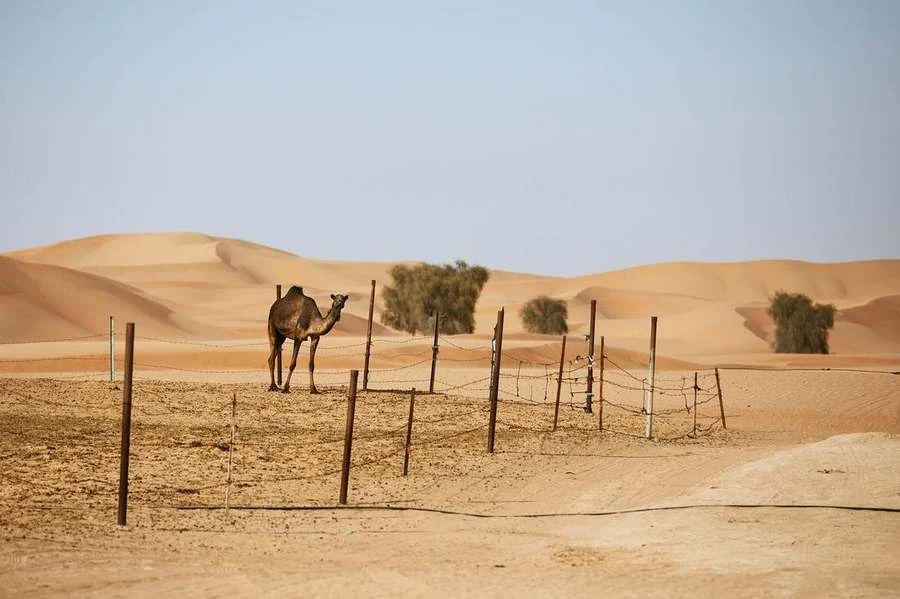
- Camel herds wander at night near the oasis edges; give them room and never feed them.
When to just take a guide
First overnight in the Empty Quarter, kids in the group, one vehicle, or no recovery experience — any one of those is reason enough. Every Liwa Camping overnight trip carries first aid, comms and a guide with decades in these specific dunes; it's also, not coincidentally, how you camp fully within the rules.
Camp with a safety net
First aid, communications, recovery kit and a licensed guide who's read these dunes for decades — on every single trip we run.
Book a Guided Overnight